

The following blog originally appeared on my wedding photography blog in May 2020 and has repurposed all original images. Some content has been adjusted accordingly.
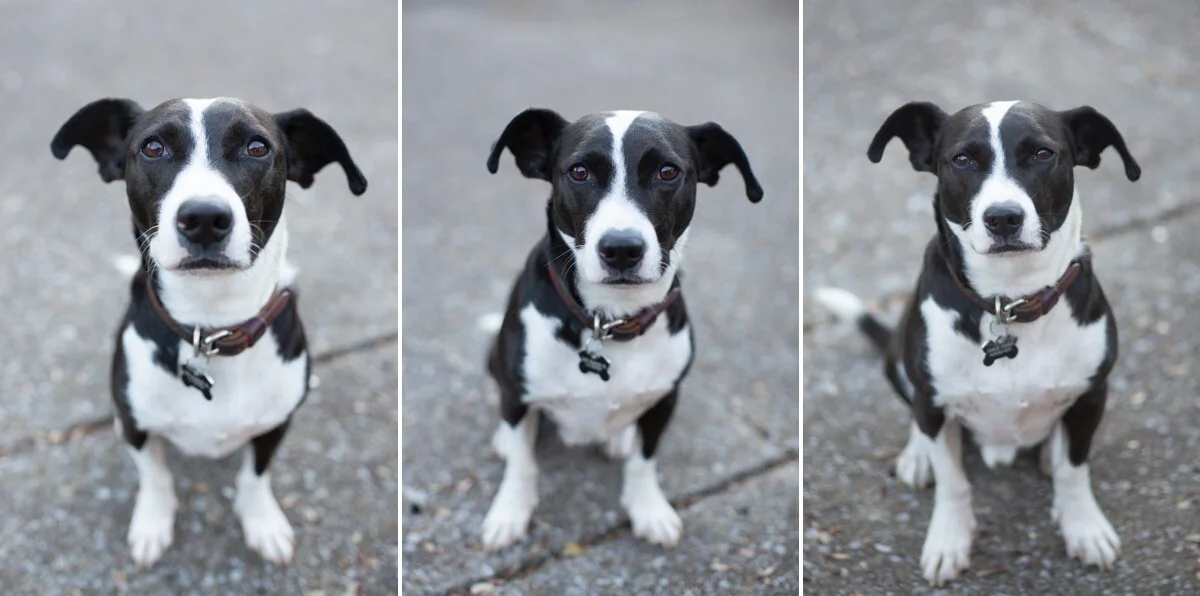
Focal length decision is one of creativity, not just necessity. When purchasing camera gear, you might think that zoom lenses are ‘king’—a range of focal lengths all in one unit. While zoom lenses are useful, they’re usually not the best option for portraits. There are several considerations to make when choosing your lens with availability of light and background being two of the biggest considerations. To make a controversial argument as quickly as possible, prime (non-zoom) lenses typically allow a greater quality of glass and optics since none of the pieces have to make large movements like zoom lenses do. This means prime lenses can allow you to let more light into your camera, making them faster to focus and providing greater options for shallow depth of field, and the perfect candidate for your portrait lens.
Please allow me to put on my nerd-hat while I walk you through a brief comparison of focal length. I recently used one of my willing co-workers (Charlie) to demonstrate the changes focal lengths can cause to facial features and background positioning.
Compression and Backgrounds
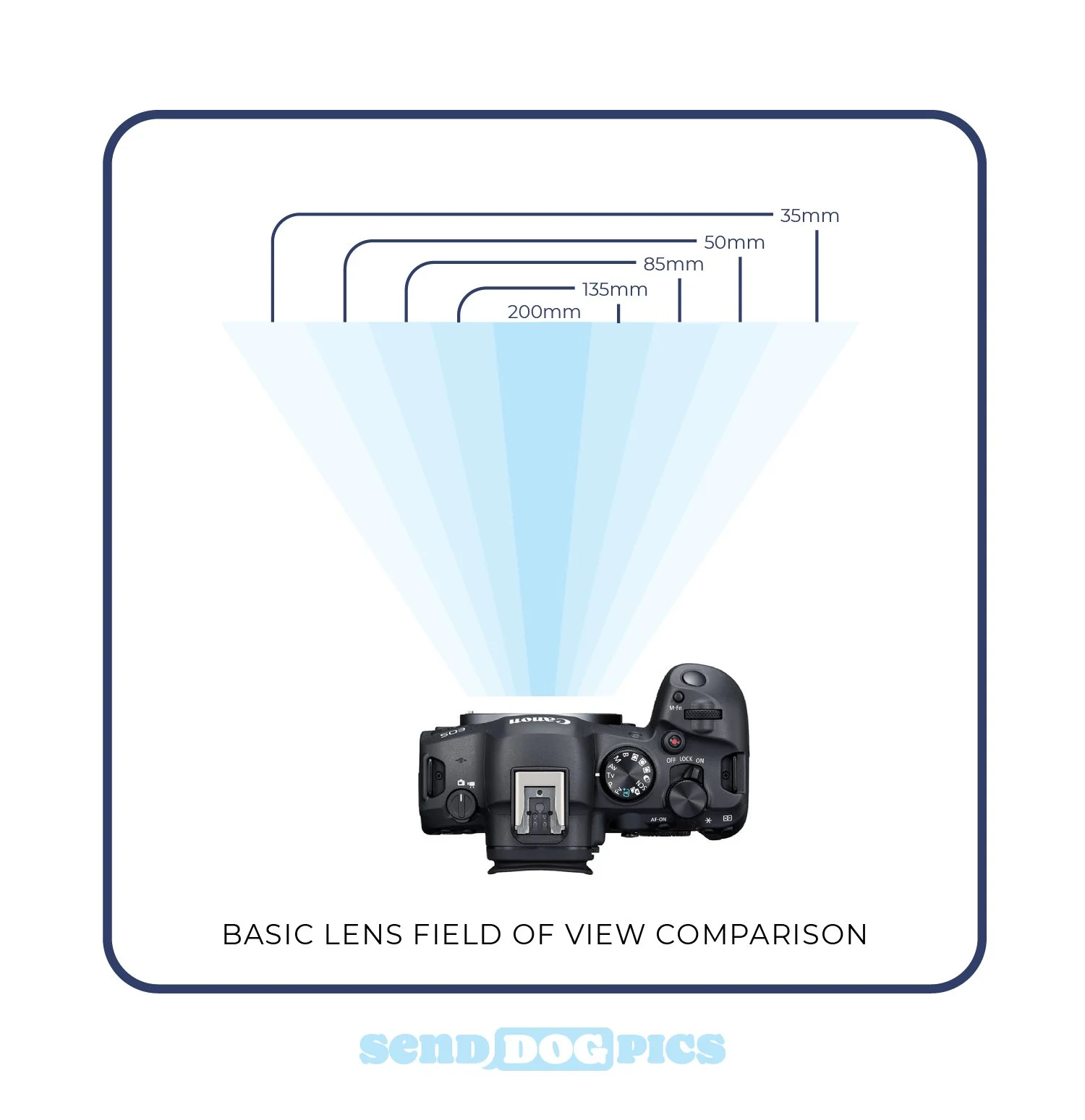
These changes you see are caused by compression. I view compression like a cone of vision—wider angles are going to make objects closer to them appear larger than they actually are, and the background will appear further away. As you tighten up your frame with a longer focal length—thus flattening the cone—the background appears larger and the object closest to the camera appears smaller. I don't know if this makes sense to anyone else, but it's how my brain processes it after using a variety of focal lengths throughout my career! Here’s a simple diagram explaining the field of view a little better.
For these three examples below, my assistant (and husband using treats as a bribe) kept his position while I moved myself to keep the subject framed equally in the center. I kept the same aperture (f 2.8) and adjusted just my shutter speed to create consistent exposure and my feet to recompose the images.
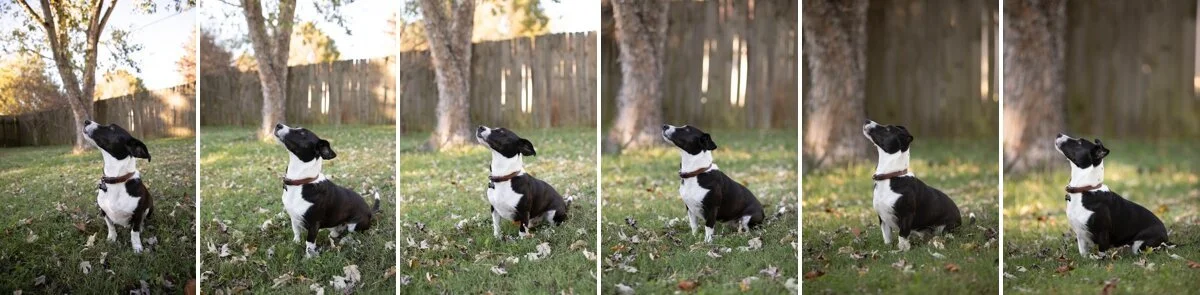
24mm | 35mm | 50mm | 85mm | 135mm | 200mm
You’ll see above that the tree appears larger and closer to Charlie even though he doesn’t move. On the images below, I used a 70-200mm zoom lens; the left is the lens at 200mm, and for the right I zoomed out to 70mm without moving my position. You can see just how drastically the focal length changes the image. We did not simply zoom the image in, you’re getting a softer background at a greater focal length and a shallower depth of field because of the lens compression.
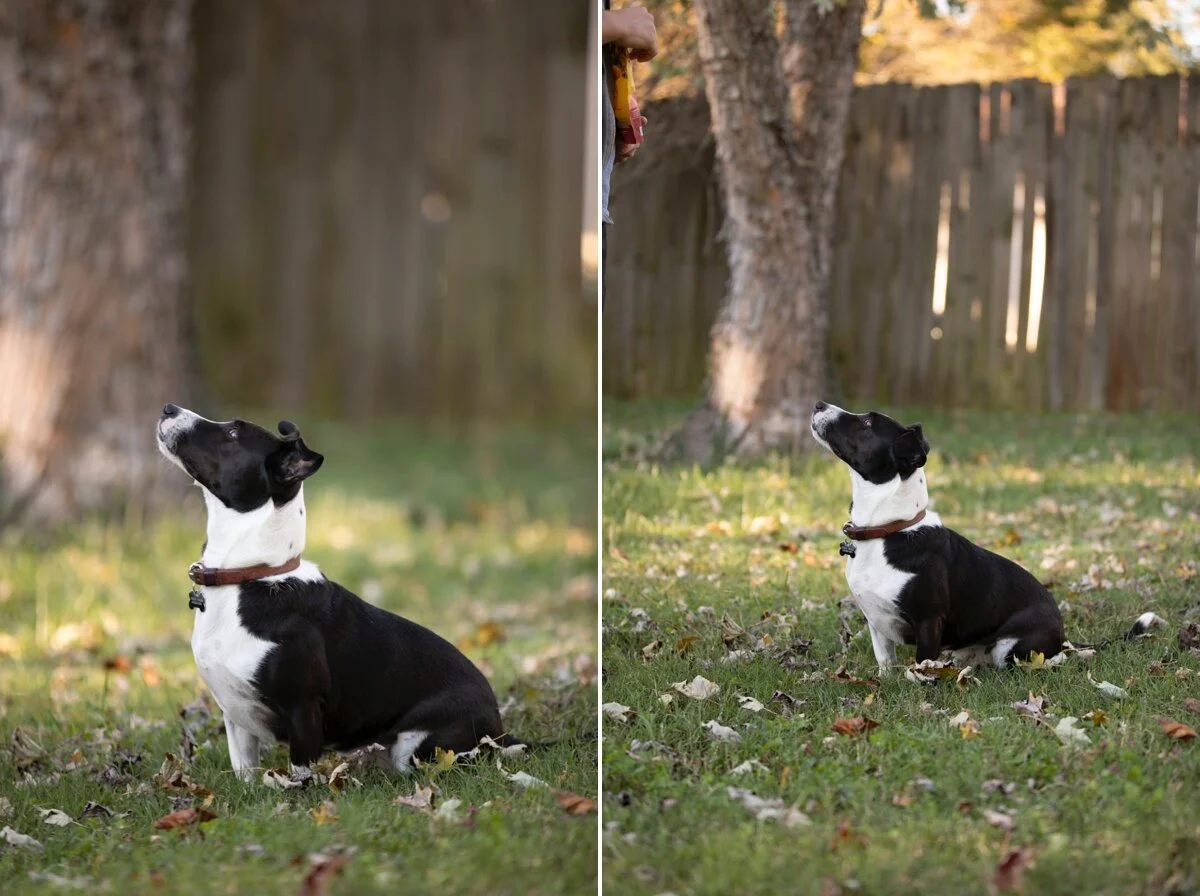
200mm | 70mm
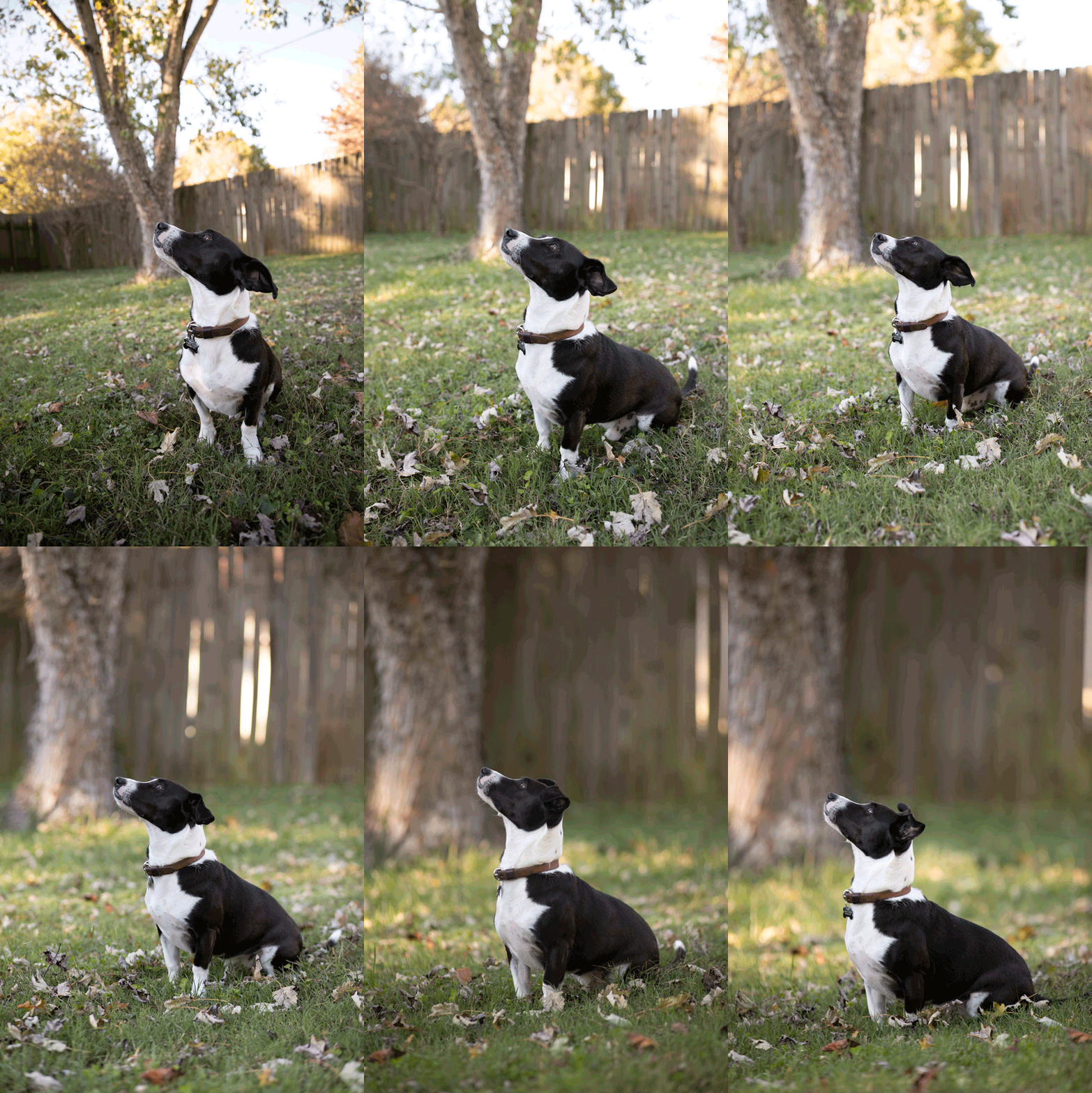
And for fun, here’s a gif showing the image from the widest angle to the longest focal length. Look out Charlie, the tree is coming for you!
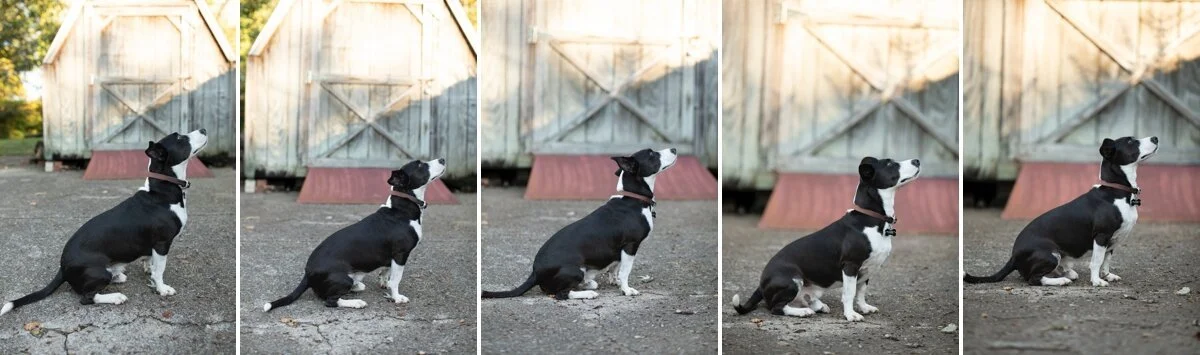
35mm | 50mm | 85mm | 135mm | 200mm
In this example, our back shed gives an awesome example of the compression caused by changing your focal length. Again, Charlie stayed in place, but the background appears to become larger and closer to him.
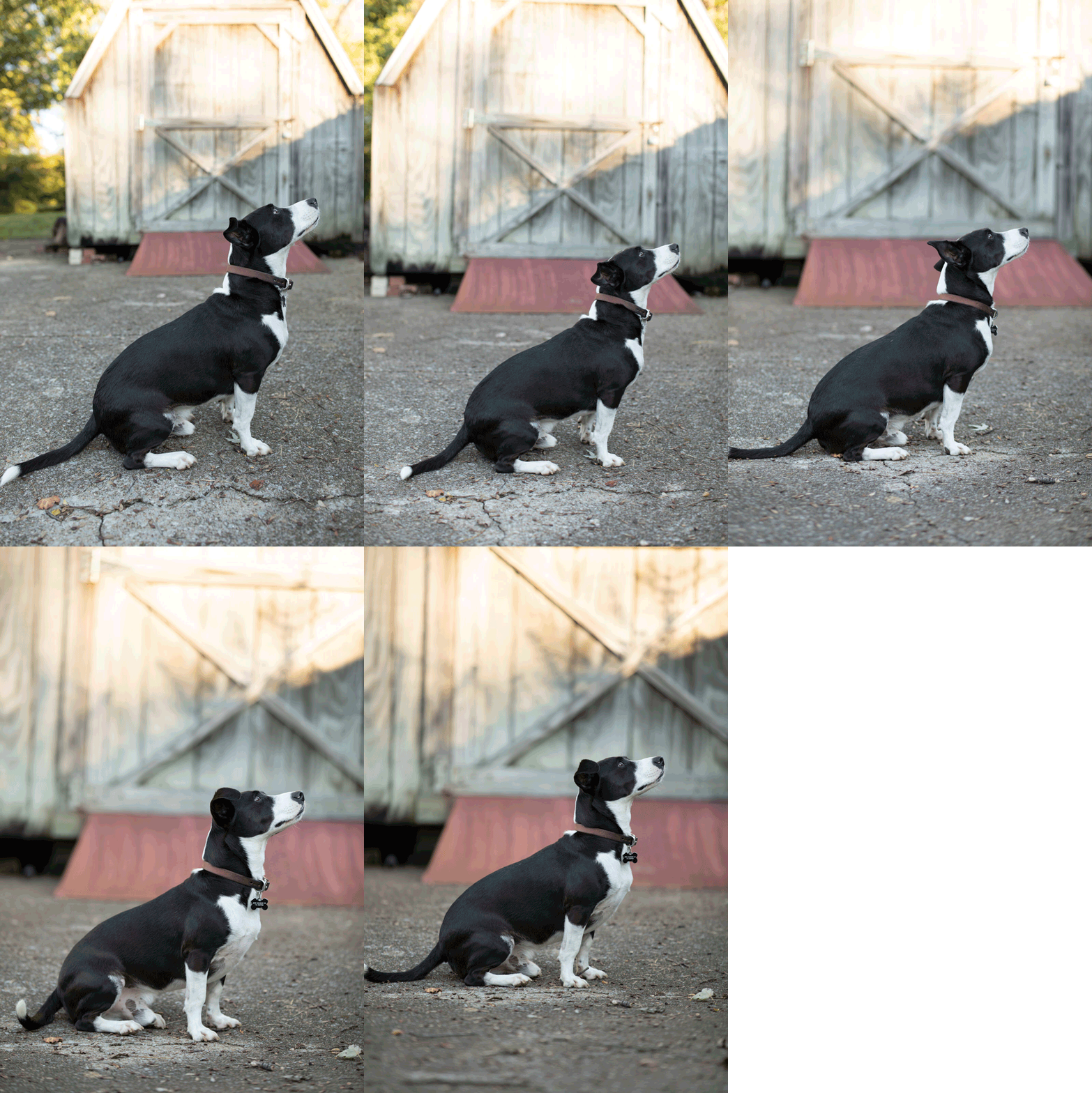
‘Round of applause for how good of a boy he is, sitting in place.
Compression and Facial Features
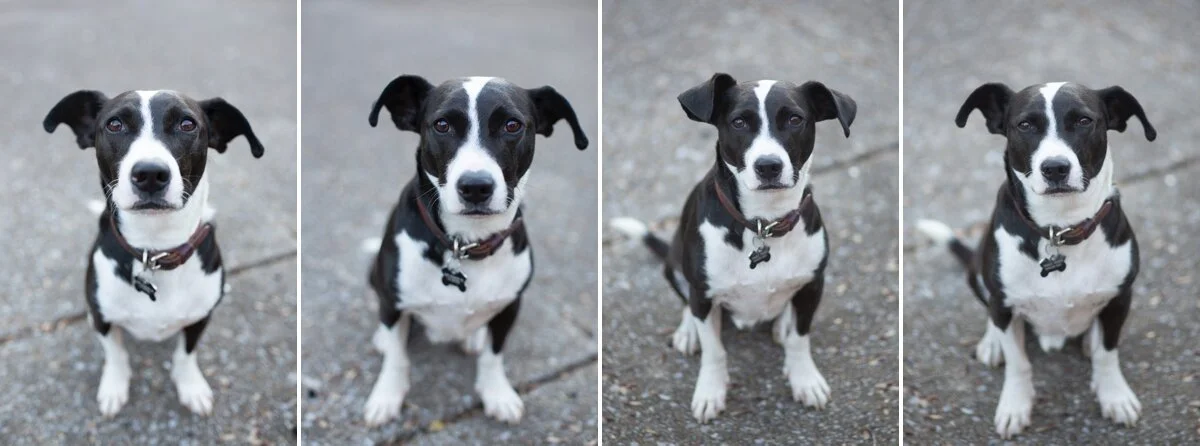
35mm | 50mm | 85mm | 135mm
This final example was intended to show the changes in facial features. You’ll see that the 35mm makes him look pretty puny where the 50mm and the 85mm appear much closer to his usual adorable face. Charlie’s eyes and nose look ginormous in the 35mm image, because those are closest objects to the lens and experiencing the greatest distortion.
I should also note that these examples are much more exaggerated because of how close I stood to him. The 135mm doesn’t necessarily always cause someone to look beefier than they actually are, in fact the compression of the 135mm can make a very pleasing image with proper composition and distance.
Summary
I think that’s enough technical talk and flipping gifs for today. Overall, lens choice comes down to the type of image you would like to make. The 24mm isn’t necessarily a lens that you should never use for a portrait, in the same way that the 200mm is useful for more than just zooming in on hands for the exchanging of the rings during a wedding ceremony. It all comes down to your creative and artistic license. Thanks for listening to my jargon, I promise I’ll keep it to a minimum for future posts!
2026 Addition | How does this apply to rescue photography?
The study above was performed while I was primarily shooting as a wedding photographer, but what about when your subject is mostly canine?
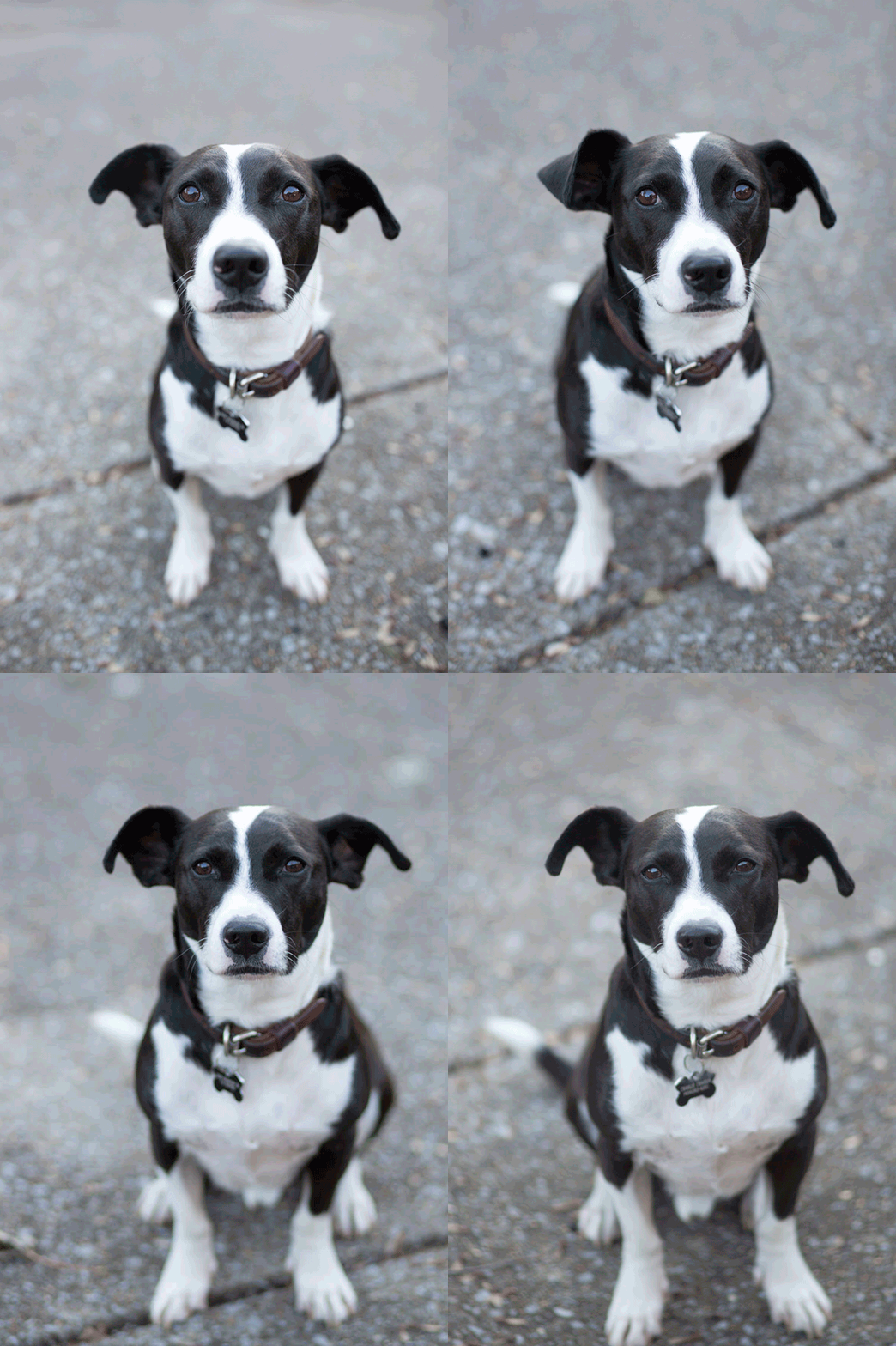
I’ve found in my rescue work that I reach for my 35mm lens the most. Dogs love to investigate by scent, so the 50mm was typically too tight for me to get the whole dog in frame. A 35mm lens is still going to provide a realistic scale of the dogs head to its body without making any features appear larger or flatter than they are in reality.
My ideal setup these days is a Canon R6 with a 35mm L series lens so that I can lock focus on my rescue subjects quickly while staying close enough that I can give “sit” and “stay” commands with a treat.
I hope you’ve found this helpful! Interested in joining our cause and photographing rescue animals? Reach out via our contact form and we’ll do our best to connect you to an area of need.